








Network Solutions
 Wireless Access Point
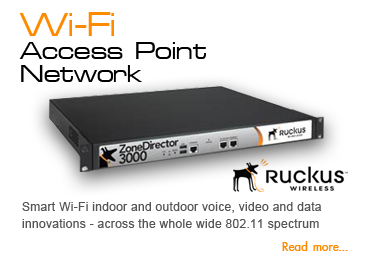
Wireless Access Point Network
Smart Wi-Fi indoor and outdoor voice, video and data innovations—across the whole wide 802.11 spectrum.
Fully-loaded, fully-capable, and fully-standard, our Smart Wi-Fi products and patented technologies offer unmatched simplicity, ridiculous reliability, and killer coverage — at a fraction of the cost of alternatives.
We'll keep you unplugged but well connected, whatever your requirements. Our customer premise equipment (CPE) for carriers delivers flicker-free IPTV and other multimedia services to millions of subscribers.
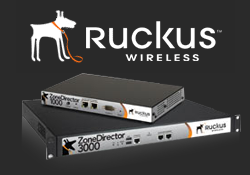
And our industrial-strength Smart Wireless LAN products for enterprise systems eliminate cost and complexity, while delivering unprecedented performance and reliability.
Indoor, outdoor, meshed, video, voice, data, 802.11n, 802.11a, 802.11g—take your pick. Everything you need is uniformly managed as a single, centralized Wireless LAN with ZoneDirector. Or you can manage thousands of standalone APs or ZoneFlex wireless LANs remotely with FlexMaster.
And our Smart Wi-Fi products support even the most rigid, latency-sensitive applications—offering carrier-level quality and ironclad security to enterprises and service providers everywhere.
More future: http://www.ruckuswireless.com/products